Generic selectors
Exact matches only
Search in title
Search in content
Post Type Selectors

What is ESG?

Sustainability and social responsibility are becoming increasingly important in the operations of companies. The ESG (Environmental, Social, Governance) perspective is not only a necessity dictated by global trends and consumer expectations but also the key to the long-term success of companies. Integrating ESG principles is important not only from an ethical standpoint but also from legal and financial perspectives, as increasingly strict regulations govern companies’ environmental, social, and governance practices in many countries around the world.

Why is ESG important for companies?

The ESG consists of three main areas:

1. Environment (Environmental): Environmental factors that focus on reducing the ecological impact caused by companies. This includes energy efficiency, reducing carbon footprint, using sustainable resources, and waste management.

2. Society (Social): Social factors focus on employee rights, contributions to communities, and issues of equality. Companies must consider workplace diversity, ethical principles, human rights, and responsible engagement with local communities.

3. Governance: Governance factors relate to the management structure, decision-making, and transparency of companies. Ethical business practices, compliance with financial regulations, and the protection of shareholder rights all contribute to ensuring the reliability and long-term stability of the company.

Businessman assemble ESG wording on wooden cube block for sustainable organization development and corporation of Environment Social Governance concept.

Legal requirements and ESG

ESG is not only a voluntary choice for companies, but the regulatory environment is increasingly encouraging them to operate sustainably.

From 2024, for example, the EU Taxonomy Regulation and the Corporate Sustainability Reporting Directive (CSRD) will impose stricter reporting obligations on large companies, which must provide detailed accounts of their application of the ESG approach.

1. EU Taxonomy Regulation: The aim of the EU Taxonomy is to provide a uniform and transparent system for defining sustainable economic activities. Companies must demonstrate how their activities align with the principles of environmental sustainability and whether these activities meet regulatory criteria.

2. Corporate Sustainability Reporting Directive (CSRD): The EU’s new reporting regulations make it mandatory for companies to present ESG topics in detail in their financial reports. Starting in 2024, large companies will need to provide detailed information annually about the sustainability goals they have achieved and their fulfillment.

3. EU Transparency Regulations: To increase corporate transparency, the EU has introduced various regulations aimed at making it easier for investors and consumers to access ESG-related corporate information. Such regulations help ensure that companies report not only on their financial performance but also on their sustainability performance.

Who does ESG apply to?

The new regulation came into effect on January 1, 2024, regarding the following companies based in Hungary:

1. Large enterprises qualifying as public interest entities, where in the previous financial year, on the balance sheet date, any two of the following three indicators exceeded the following thresholds:

  • the total assets exceed 10 billion HUF,
  • the annual net revenue exceeds 20 billion HUF,
  • the average number of employees exceeds 500;


2. large enterprise, where in the previous financial year, on the balance sheet date, any two of the following three indicators exceeded the following thresholds
:

  • the total assets exceed 10 billion HUF,
  • the annual net revenue exceeds 20 billion HUF,
  • the average number of employees exceeds 250; and


3. small and medium-sized enterprises qualifying as public interest entities
.


While the above thresholds apply to those subject to sustainability due diligence obligations, the scope of those required to report on sustainability will be determined by the accounting law, which will also be amended, in a slightly different manner compared to the above.

A public interest entity is defined as an enterprise whose transferable securities have been admitted to trading on a regulated market in any state of the European Economic Area, as well as any enterprise that is classified as a public interest entity by law (for example, certain insurers, banks).

Organizations that do not reach the specified thresholds are also required to comply with the provisions if they voluntarily undertake ESG data provision under the ESG law or if the law makes ESG data provision mandatory for them. The scope of the ESG law also extends to ESG certifiers, ESG consultants, companies that sell and manufacture sustainability software, and institutions that educate ESG consultants.

The new ESG law fundamentally prescribes mandatory corporate sustainability due diligence obligations for the enterprises under its scope, while the amended accounting law will determine the obligations regarding sustainability reporting.

The ESG provisions are included in the 187th issue of the Hungarian Gazette published on December 22, 2023, which contains the Act CVIII of 2023, aimed at promoting sustainable financing and unified corporate responsibility, taking into account environmental, social, and social aspects, and amending the rules of corporate social responsibility and related laws.


ESG as a market advantage

In addition to regulatory requirements, considering ESG provides numerous market advantages for companies. In an increasingly sustainability-driven economic environment, those companies that successfully apply ESG principles can strengthen their competitive edge.


– Investor Interest: Investors are increasingly making decisions based on ESG criteria. Companies committed to ESG are more attractive to responsible investors who wish to make sustainable and profitable investments in the long term.

– Customer Awareness and Brand Building: Consumers are increasingly making purchasing decisions based on ESG principles. Corporate social responsibility and environmental awareness provide companies with the opportunity to build a strong brand and create a loyal customer base.

– Reducing Regulatory Risks: Companies that take ESG aspects into account adapt more easily to the constantly changing regulatory environment. Ensuring legal compliance not only protects companies from penalties but also facilitates smooth operations.

How can companies integrate ESG?

For companies, the successful implementation of ESG principles not only provides legal and financial benefits but also contributes to their long-term sustainability. The following steps can help integrate an ESG perspective:

1. Developing ESG Strategies: Companies should set clear and measurable ESG goals and incorporate them into their long-term business strategies.

2. Compliance with Regulatory Requirements: To comply with legal requirements, it is advisable to seek expert assistance in fulfilling reporting obligations and developing the ESG strategy.

3. Transparency and Communication: Companies must communicate their ESG results clearly and regularly to the public, investors, and customers to strengthen their credibility and build trust.

Conclusion

The ESG is not only the foundation of responsible corporate operations but is also crucial for compliance with regulations, gaining a competitive advantage, and ensuring sustainable development. For companies, applying the principles of ESG not only ensures compliance with legal requirements but also offers long-term financial and reputational benefits. Those companies that timely adapt to ESG will be able to secure a sustainable future and successful operations in the global economy.

The ESG and eco-friendly cleaning products

How does green cleaning affect ESG scoring?

Implementing green cleaning practices can positively influence a company’s ESG score by reducing environmental impacts, promoting social responsibility, demonstrating good governance practices, and showcasing a commitment to sustainable and ethical practices.

The Impact of Green Cleaning Services on ESG Scores

Green cleaning can positively influence a company’s ESG (Environmental, Social, and Governance) rating by contributing to the environmental and social factors assessed during ESG scoring.

  • Environmental Factors: Green cleaning practices use eco-friendly products and methods that reduce the amount of harmful chemicals and waste. This can lower the company’s carbon footprint by mitigating air and water pollution, conserving water and energy, and reducing greenhouse gas emissions.
  • Social Factors: Green cleaning can also have social benefits, such as creating a healthier and safer workplace for employees. By reducing the number of harmful chemicals and waste entering the environment and promoting long-term environmental sustainability, it can also benefit the broader community.
  • Governance Factors: A regular green cleaning program demonstrates the company’s commitment to responsible governance, as it shows that the company is taking steps to minimize environmental impact and ensure the safety and health of employees and other facility users.

Environment and Health

Cleaning and disinfecting agents are essential for ensuring public health. However, their use can adversely affect the environment and human health. The toxic components of commercial cleaning and disinfecting agents can expose cleaning staff and other users of the facility to concentrated compounds, which can lead to skin and eye irritation, respiratory problems, and in rare cases, death.

Furthermore, some surfactants used in traditional cleaning agents degrade slowly or transform into more toxic, persistent, and bioaccumulative chemicals, which can threaten aquatic life. Similarly, phosphorus or nitrogen components can contribute to nutrient loading in water bodies, adversely affecting water quality.

Another concern is that volatile organic compounds (VOCs) found in cleaning agents can affect indoor air quality and contribute to smog formation in outdoor air.

Therefore, it is important to use cleaning agents that have low VOC content and minimal impact on the environment. This can help minimize the potential harmful effects of cleaning agents on the environment and human health.

Social Equity

Green cleaning practices can improve workplace equity by creating a healthier and safer environment for all employees.

Green cleaning products and practices prioritize the use of non-toxic and environmentally friendly materials, which can reduce the risk of health problems and diseases that disproportionately affect marginalized communities.

By promoting a safer and healthier work environment, green cleaning can also reduce the number of sick days taken by employees and foster greater productivity, benefiting all workers regardless of socioeconomic background.

Additionally, promoting environmentally friendly practices can help mitigate the negative impact of cleaning products on low-income and minority communities, which are often disproportionately affected by pollution and toxic waste.

Corporate Governance

The introduction of green cleaning practices demonstrates responsible corporate governance in several ways.

  • By reducing the harmful effects of cleaning agents on the environment, it shows a commitment to environmental stewardship. By using non-toxic and environmentally friendly cleaning agents, organizations can reduce their carbon footprint and promote sustainability.
  • It demonstrates a commitment to social responsibility. By using non-toxic and environmentally friendly cleaning agents, organizations can promote the health and safety of their employees and the wider community. This can help reduce the negative impact of cleaning agents on low-income and marginalized communities, which are often disproportionately affected by pollution and toxic waste.
  • By promoting transparency and accountability, it shows a commitment to ethical governance. By implementing proper labeling and training, organizations can ensure that employees and the public are aware of the environmental and health impacts of cleaning agents. This can build trust among stakeholders and promote greater accountability.

Simple methods for introducing green workplace cleaning

Methods for reducing waste and environmental impacts include implementing the following while maintaining high cleaning standards:

  • Reusable cleaning tools: Choose reusable tools instead of disposable cleaning supplies. Create a rental program for collecting and washing mop cloths, shop towels, and microfiber cloths. This approach reduces waste and associated costs.
  • Dilution control systems: Excessive use of chemicals can damage surfaces, equipment, people, and the environment. Dilution control systems dispense the appropriate amount of chemicals needed for the task, reducing waste and improving cleaning results.
  • Smart paper towel dispensers: Traditional paper towel dispensers generate unnecessary waste. Switch to adjustable-length, automatic setting dispensers that reduce the use of excess paper towels.
  • Carpeting: Walk-off mats placed at entrances help capture dirt and debris, thus reducing the need for frequent cleaning and the use of chemicals.
  • Products and services: Facility or company managers can take significant steps towards compliance with ESG regulations by using and utilizing cleaning products and services that meet specific requirements.

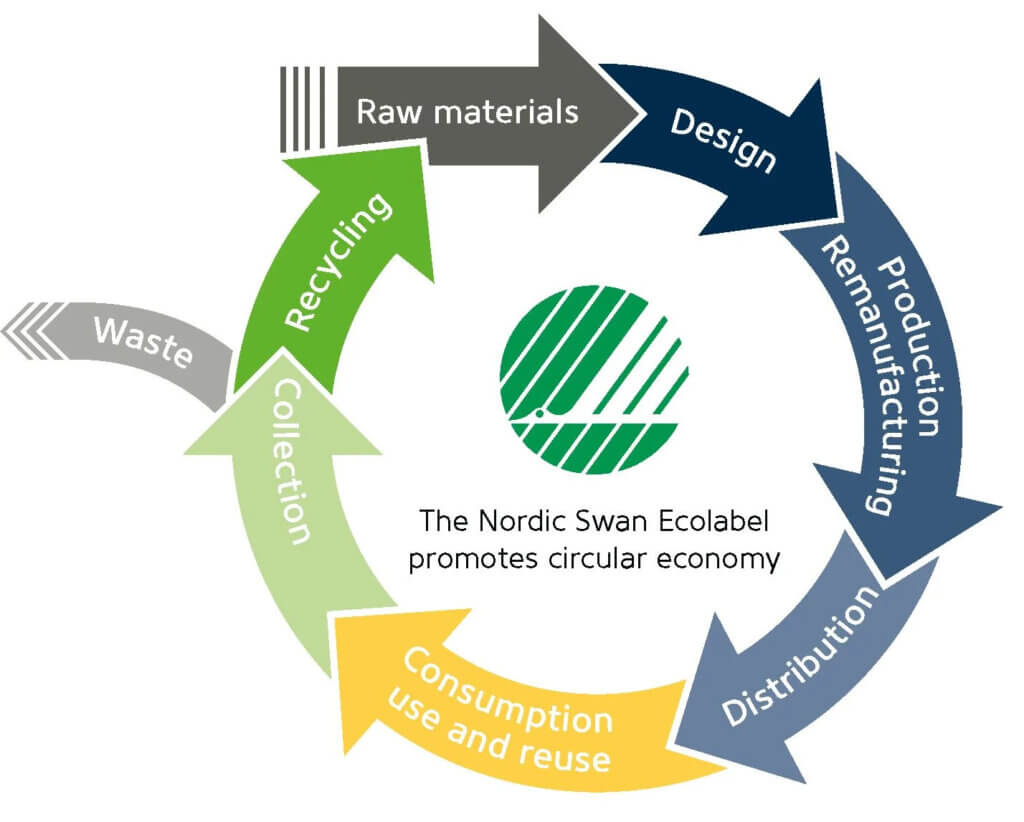
The ESG and the Northern Swan

As one of the world’s strictest environmental certification labels, the Nordic Swan eco-label can only be awarded to products and services that meet ambitious environmental requirements.

The Nordic Swan eco-label assesses the entire manufacturing process of the product. It also takes into account harmful emissions during production, as well as energy and water consumption.

With its help, you can also choose the most suitable product. By choosing a product with the Swan label, you protect nature and the environment.

Save the Earth’s resources too, choose products marked with the Nordic Swan eco-label and show that you care about the future. Eco-friendly products are better for nature. Better for you.

https://www.nordic-swan-ecolabel.org/official-nordic-ecolabel/circular-economy/

ESG compatible products in our offer:

Amennyiben nagyobb mennyiséget szeretne rendelni, mint amennyi pillanatnyilag készleten található, kérjük lépjen kapcsolatba velünk és kérjen ajánlatot az alábbi űrlapon: